We research products independently. When you buy through links on this page, we may earn a commission from Amazon at no extra cost to you. As an Amazon Associate we earn from qualifying purchases. Read our affiliate disclosure.
The main chamber vacuum sealer uses are the ones an external sealer cannot do: sealing liquids like soups, stocks and brines without freezing them, fast infusion of flavor into fruit and spirits, compressing fruit and vegetables, quick pickling and marinating, and vacuum sealing smooth Mylar and cheap smooth pouches. It does all the everyday freezer and sous vide sealing too, often more cheaply per bag.
The reason is how it works. A chamber sealer puts the whole bag inside a box and removes the air from the box, so the pressure drops evenly inside and outside the bag. Liquids stay put, and the pressure change itself becomes a cooking tool.
10 chamber vacuum sealer uses at a glance
| Use | What it does | Works in an external sealer? |
|---|---|---|
| Soups, stocks, sauces | Seals liquid without freezing first | No; freeze first |
| Brines and marinades | Seals meat with its liquid | Barely; small amounts only |
| Infusion | Pushes liquid into porous food fast | No |
| Compression | Dense, glassy fruit and vegetables | No |
| Quick pickles | Brine penetrates fast | No |
| Sous vide portions | Tight bags, marinade included | Yes, with care |
| Bulk freezer sealing | Cheaper smooth pouches | Yes, with embossed bags |
| Smooth Mylar for dry storage | Vacuum plus seal | Heat-seal only |
| Delicate foods | Controlled vacuum levels | Partly (pulse) |
| Portioning wet leftovers | Chili, curry, stew in flat packs | Freeze first |
1. Sealing soups, stocks and sauces
This is the headline use. Pour cooled stock into a pouch, stand it in the chamber, close the lid and seal. Nothing gets sucked toward the seal bar, because the air is removed from both sides of the bag at once. With an external sealer, you would have to freeze the liquid first and seal the frozen block; our guide to vacuum sealing liquids explains both methods.
Tip: chill liquids well first. Under vacuum, water boils at a lower temperature, so warm liquids can bubble up and spill into the chamber.
2. Brines, marinades and wet meat
Raw chicken in its marinade, pork in brine or fish with butter and herbs seal cleanly in a chamber. The marinade stays in the bag and coats the food evenly. This is also the easiest way to prepare sous vide bags with liquid. If marinating is your main goal, our vacuum marinator guide compares dedicated containers too.
3. Infusion
When the chamber pulls a vacuum, air trapped inside porous food (fruit, vegetables, some cuts of meat) expands and escapes. When the lid opens and pressure returns, the surrounding liquid rushes into those spaces. Repeat the cycle, and flavors that would take days to soak in arrive in minutes. Common examples: fruit soaked in syrup or spirits, vegetables in a seasoned brine, and flavored cocktails.
Anova's chamber sealer has a dedicated Infuse preset for this. On other machines, run a full vacuum cycle without sealing, release, and repeat.
4. Compression
Seal porous fruit or vegetables (watermelon, cucumber, apple, pineapple) under full vacuum and their air pockets collapse. The result is denser, more vivid, almost translucent, and it holds any flavor you add, like lime juice or a light syrup. Restaurants use it for salads and garnishes. Anova's chamber model has a Compress/Pickle preset.
5. Quick pickles
The same pressure trick pushes brine into cucumbers, onions or carrots quickly. You get pickle flavor in a short time rather than days. Keep these in the refrigerator: they are quick pickles, not canned pickles. Clemson Cooperative Extension (HGIC 3865) says vacuum packaging is not a substitute for safely processing perishable foods meant for room-temperature storage. For shelf-stable pickles, follow a tested recipe from the USDA Complete Guide to Home Canning or the National Center for Home Food Preservation.
6. Sous vide portions
Chamber sealers make tight, consistent sous vide bags, and they let you add marinade, butter or stock without fighting the seal. Pouches rated for cooking, such as Avid Armor's ACPA32 (listed for sous vide, boiling, simmering and microwaving), are the ones to use. Our chamber vacuum sealer bags guide compares them.
7. Bulk freezer sealing on cheaper pouches
Chamber machines vacuum smooth pouches, which are cheaper than the embossed rolls external sealers require. If you seal a whole deer, a half hog or a monthly warehouse-club run, the per-bag savings add up. Smooth pouches also come in 3 to 4 mil and thicker, which helps with bones.
8. Mylar for long-term dry storage
An external sealer can heat-seal smooth Mylar but cannot vacuum it. A chamber can. VacMaster's listing says the VP210 seals Mylar up to 7 mil, so you can vacuum and seal rice, beans or freeze-dried food in one step, then add an oxygen absorber for long storage if you choose. Only truly dry foods belong in Mylar at room temperature.
9. Delicate foods
Many chamber sealers let you set the vacuum level or time. Avid Armor's USV1 has three vacuum levels and three seal-time settings, and the USV20 has timed vacuum from 15 to 60 seconds. Lower settings keep bread, berries, soft cheese and fish fillets from being crushed.
10. Portioning wet leftovers
Chili, curry, stew and pasta sauce can go straight into flat pouches for the freezer, with no pre-freezing step. Lay them flat to freeze, and they stack like files. Cool cooked food first and get it into the refrigerator or freezer within 2 hours, as USDA advises.
Which chamber sealer for which use
| Use | What to look for | Example | Amazon |
|---|---|---|---|
| Infusion and compression | Presets or adjustable vacuum | Anova Precision Chamber (Infuse, Compress/Pickle, Dry/Cool presets) | Check price |
| Liquids and marinades, small kitchen | Light machine, adjustable vacuum | Avid Armor USV20: 11.5 in. bar, pouches to 11 x 10 in., timed vacuum 15 to 60 sec, about 17.5 lb | Check price |
| Big batches and game | Larger chamber, durable pump | VacMaster VP210: dry pump, 10.25 in. double-wire bar, pouches to 10 x 13 in., 72 lb | Check price |
| Mylar | Thick-film seal | VacMaster VP210 (Mylar to 7 mil) | Check price |
| Very small spaces | Compact chamber | Avid Armor USV1: 12 x 12 x 6.25 in., 13 lb, pouches to 10 x 10 in. | Check price |

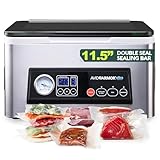


Pump type matters for heavy use; our oil pump vs dry pump guide explains the trade-offs. For full reviews, see our best chamber vacuum sealers and our Anova chamber sealer review.
What a chamber sealer will not do
- It will not make food shelf-stable. Perishable vacuum-packed food still belongs in the refrigerator between 34 and 40 °F or the freezer at 0 °F or below, per Clemson Cooperative Extension.
- It will not replace canning. Pressure canning with a tested recipe is the only safe route to shelf-stable low-acid food.
- It will not fit everything. Chamber height limits bulky items like whole birds or bone-in roasts. Check the chamber dimensions against what you seal most.
- It is not portable. Even compact models weigh 13 lb or more.
Common mistakes
- Sealing hot liquids. They boil under vacuum. Chill first.
- Overfilling pouches. Leave room so liquid stays below the seal bar.
- Leaving infused or compressed food out. It is perishable; refrigerate it.
- Using storage-only pouches for sous vide. Check the heat rating.
- Skipping pump maintenance. Oil-pump machines need oil changes per the manual; dry pumps need less care but still need cleaning.
FAQ
What can you do with a chamber vacuum sealer?
Everything an external sealer does, plus sealing soups, stocks, brines and marinades without freezing them first, fast infusion of flavors into fruit or spirits, compressing fruit and vegetables, quick pickling, marinating, vacuum sealing smooth Mylar, and using cheaper smooth pouches instead of embossed rolls.
Is a chamber vacuum sealer worth it?
If you seal liquids, marinades or large volumes of food, usually yes, because it handles liquids and uses cheaper pouches. If you seal a few dry bags a month, an external sealer is lighter and cheaper. Chamber machines weigh from about 13 lb (Avid Armor USV1) to 72 lb (VacMaster VP210).
What is vacuum infusion?
Infusion uses the pressure drop in the chamber to pull air out of a porous food, then lets liquid rush in when the pressure returns. It speeds up flavoring fruit, vegetables and spirits. Anova's chamber sealer has a dedicated Infuse preset for it.
What is vacuum compression?
Compression seals porous fruit or vegetables like watermelon, cucumber or apple under full vacuum, which collapses their air pockets and gives them a dense, glassy texture and more intense color. Anova's chamber sealer has a Compress/Pickle preset.
Do vacuum-pickled or infused foods keep at room temperature?
No. Quick pickles and infused fruit made in a chamber sealer are refrigerator foods. Clemson Cooperative Extension says vacuum packaging is not a substitute for safely processing perishable foods meant for room-temperature storage. For shelf-stable pickles, follow a tested canning recipe from the USDA Complete Guide to Home Canning.