We research products independently. When you buy through links on this page, we may earn a commission from Amazon at no extra cost to you. As an Amazon Associate we earn from qualifying purchases. Read our affiliate disclosure.
The bag is the one part of sous vide that touches both the food and the hot water for hours, so it needs two qualities: a seal that will not fail mid-cook and film rated for the temperature. Most failures come from using storage bags that were never meant to sit in a water bath, or from air left inside that makes the bag float.
The best sous vide vacuum bags are the ones the maker rates for cooking, sized for your sealer, and tough enough for bones or long cooks. Below are our picks for external sealers, chamber sealers and reusable systems, each with the heat rating the brand publishes.
Our top picks at a glance
Quick picks
- Best Overall: Anova Precision Vacuum Sealer Bags (Pre-cut). Best for external sealer owners who want bags built for sous vide.
- Best for Chamber Sealers: Avid Armor ACPA32 Pouches. Best for chamber owners who cook and store in the same bag.
- Best Heat Rating: Bonsenkitchen 11 in. x 50 ft Rolls. Best for high-temperature cooks and custom lengths.
- Best for FoodSaver Owners: FoodSaver Variety Pack, 120 Count. Best for FoodSaver sealers and mixed portion sizes.
- Best Reusable Vacuum Bags: ZWILLING Fresh & Save Bags. Best for reusable valve bags with a stated sous vide rating.
- Best Silicone Bag: Stasher Half Gallon. Best for plastic-free, no-machine sous vide by water displacement.
Sous vide bags compared
| Product | Best for | Type | Works with | Heat rating (per maker) | Pack | Amazon |
|---|---|---|---|---|---|---|
| Anova Pre-cut Bags | External sealers | Embossed, multilayer | External sealers | Boiling for up to 4 hours | 50 bags, 8.6 x 11.8 in. | Check price |
| Avid Armor ACPA32 | Chamber sealers | Smooth pouch, 3.5 mil | Chamber sealers | Sous vide, boiling, simmering, microwave | 300 (100 each of 6 x 10, 8 x 12, 10 x 13 in.) | See options |
| Bonsenkitchen Rolls | High-temp cooks | Embossed roll, 4 mil | External and chamber sealers | Water up to 230 °F (110 °C) | 2 x 11 in. x 50 ft | See options |
| FoodSaver Variety Pack | FoodSaver owners | Embossed pre-cut | FoodSaver sealers | Sous vide, microwave heating | 120 (pint, quart, gallon) | Check price |
| ZWILLING Fresh & Save | Reusable vacuum | Valve zip bag | ZWILLING pump | 197.6 °F | 10 assorted | Check price |
| Stasher Half Gallon | Plastic-free | Platinum silicone, Pinch-Loc | No machine | Marketed for sous vide; oven to 425 °F | 1 bag, 64 fl oz | Check price |


Ratings come from each brand's product page or official listing. A heat rating is the brand's claim for its film; always stay within it.
The best sous vide bags, reviewed
1. Anova Precision Vacuum Sealer Bags (Pre-cut): Best Overall
Who it's for: owners of any external sealer, including the Anova Pro, who want bags designed around sous vide.
Anova makes sous vide cookers, and it designed these bags for the job. Anova says they are FDA-approved and BPA-free and can safely withstand multi-day cooks and boiling temperatures for up to 4 hours. Each box holds 50 pre-cut bags at 8.6 x 11.8 in. (22 x 30 cm), a size that fits two steaks or a pair of chicken breasts. The film has two layers of LDPE and one of nylon (PA), a common construction for cooking bags because nylon resists punctures and heat. For other brands' boiling ratings, see can you boil vacuum sealer bags.
The bags are embossed, so they work in any external sealer, not just Anova's. If you prefer custom lengths, Anova also sells 11 in. rolls in the same film. Our Anova Precision Vacuum Sealer Pro review covers the sealer they are built for.
Pros
- Rated for boiling temperatures for up to 4 hours
- Sized for typical sous vide portions
- Work in any external sealer
Cons
- One size per box
- Cost more per bag than bulk rolls
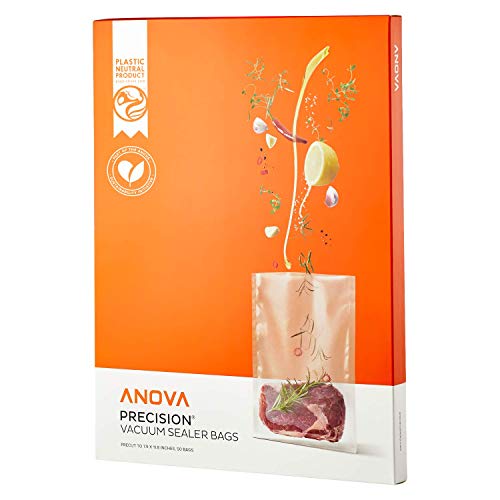
Anova Precision Vacuum Sealer Bags (Pre-cut), 50 Count
by Anova Culinary
2. Avid Armor ACPA32 Pouches: Best for Chamber Sealers
Who it's for: chamber sealer owners who want one box of bags for the freezer and the water bath.
Chamber pouches are smooth and cheaper than embossed film, and this box gives you 100 each of 6 x 10, 8 x 12 and 10 x 13 in. pouches. At 3.5 mil they are a little heavier than standard 3 mil pouches. Avid Armor lists them for freezer storage, sous vide, boiling, simmering and microwaving, the broadest use rating among the chamber pouches we have covered. The three sizes are also a quick way to learn which pouch you actually use most.
Smooth pouches will not vacuum in an external sealer. If you own both machine types, keep embossed bags for the external one. Our chamber vacuum sealer bags guide compares more pouches.
Pros
- Rated for sous vide and boiling
- Three sizes, 300 pouches
- Low cost per pouch
Cons
- Chamber sealers only
- Largest size is 10 x 13 in.

Avid Armor ACPA32 Chamber Vacuum Sealer Bags, 300-Count Assorted
by Avid Armor
Currently unavailable on Amazon
3. Bonsenkitchen 11 in. x 50 ft Rolls: Best Heat Rating
Who it's for: cooks who run hot (vegetables and some braises), and anyone who wants custom bag lengths.
Bonsenkitchen lists these rolls at 4 mil, with embossed channels on one side and a clear face on the other. Its rating is the highest we have found on a vacuum roll: water up to 230 °F (110 °C), plus boil-safe, microwave-safe and freezer-safe. Two 50 ft rolls give you 100 ft of 11 in. film, so you can make a bag for a rack of ribs or a single chop. Bonsenkitchen says the rolls are compatible with all major brand vacuum sealers.
Bonsenkitchen does not name the film materials on its page. If that matters to you, Anova's bags list their layers.
Pros
- Highest stated heat rating here
- 4 mil film for bones
- 100 ft per box
Cons
- Film materials not named
- 50 ft rolls may not fit every built-in roll holder

Bonsenkitchen Vacuum Sealer Rolls, 11 in x 50 ft (2 Pack)
by Bonsenkitchen
Currently unavailable on Amazon
4. FoodSaver Variety Pack, 120 Count: Best for FoodSaver Owners
Who it's for: FoodSaver owners who batch-prep sous vide meals in several sizes.
The 120-count box has 20 pint, 60 quart and 40 gallon pre-cut bags with align-to-seal, tear-to-open tops. FoodSaver describes them as BPA-free and safe for sous vide cooking, microwave heating, and the freezer, refrigerator and pantry, and says they work with all FoodSaver vacuum sealing systems. Quarts suit single portions; gallons hold a pork shoulder or a family pack of thighs. More options in our FoodSaver bags guide.
Pros
- Three sizes for different portions
- Sous vide use listed
- Tear-open tops
Cons
- FoodSaver does not publish a maximum temperature for this pack
- Pre-cut bags waste film on short items

FoodSaver Variety Pack Vacuum Seal Bags, 120 Count
by FoodSaver
5. ZWILLING Fresh & Save Bags: Best Reusable Vacuum Bags
Who it's for: people who cook sous vide often and want to stop throwing bags away.
ZWILLING's valve bags use a zipper plus a red silicone valve, and the Fresh & Save pump pulls the air out and stops automatically. ZWILLING lists the bags as BPA-free, freezer-safe, microwave-safe without the vacuum seal, and suitable for sous vide with a heat resistance of 197.60 °F. That covers the common sous vide range for meat, fish and eggs. They need the ZWILLING pump, which is sold separately or in a starter set. Compare them with other systems in our reusable vacuum seal bags guide.
Pros
- Reusable, with a published sous vide rating
- Assorted sizes
- Same bags work for fridge and freezer storage
Cons
- Needs ZWILLING's pump
- A zipper and valve seal is less robust than a heat seal on very long cooks

ZWILLING Fresh & Save 10-pc Vacuum Sealer Bags, Assorted
by ZWILLING
6. Stasher Half Gallon: Best Silicone Bag
Who it's for: cooks who want to avoid plastic film, or who do not own a vacuum sealer.
Stasher's half-gallon bag is made of platinum silicone with a Pinch-Loc seal. Stasher lists it at 8.5 x 10.25 x 1.5 in. and 64 fl oz, markets it for sous vide (it says the bag holds two strip steaks), and lists it as dishwasher-, microwave- and oven-safe up to 425 °F. There is no valve, so you remove air with the water displacement method: lower the open bag into the water until the pressure pushes the air out, then pinch it closed.
Silicone bags are thicker and float more easily than vacuum film, so plan to clip or weigh them. They are also a higher up-front cost, offset by reuse.
Pros
- Plastic-free and reusable
- Works without any sealer
- Dishwasher safe
Cons
- Water displacement leaves a little more air than a vacuum
- Tends to float; needs clips or weights

Buying guide: how to choose sous vide bags
Match the bag to your sealer
- External (suction) sealers need embossed bags or rolls: Anova, FoodSaver, Bonsenkitchen.
- Chamber sealers use smooth pouches, which cost less. Embossed bags also work in a chamber if they fit.
- Handheld pumps need their own valve bags.
- No sealer: silicone or zipper freezer bags with water displacement.
Heat rating
Use the highest temperature you cook at, then check the bag's rating. Most sous vide for meat and fish runs well below boiling, so any bag rated for sous vide covers it. Vegetables and some long braises are cooked hotter, where a high rating like Bonsenkitchen's 230 °F gives margin. Storage-only bags, including Mylar, are not for cooking: LEM, for example, rates its Mylar bags to only 176 °F.
Thickness and bones
Bone-in cuts and shellfish can puncture thin film during a long cook. Choose 4 mil film or double-bag, and fold a paper towel over sharp bone ends before sealing.
Size
Portion first, then pick the bag. A single layer of food in a bag cooks more evenly than a stack. Quart or 8 x 12 in. bags cover most proteins; gallon bags or 11 in. rolls suit roasts and racks.
Reusable or disposable?
Reusable bags save money and plastic if you cook often. Disposable vacuum bags give the most reliable seal and the closest contact for long cooks, and they double as freezer bags for meal prep. For a full look at sealers that pair with these bags, see our best vacuum sealers for sous vide.
How to keep sous vide bags from floating or leaking
- Remove as much air as possible. Use a vacuum sealer, a valve pump, or the water displacement method.
- Leave enough headspace above the food for a clean seal, about 3 in. with heat-seal bags.
- Keep the seal line dry. Fold the top of the bag over while you fill it.
- Double seal long cooks if your sealer offers it, or add a second seal line by hand.
- Clip or weigh bags so they stay fully under water.
- Do not overfill the pot. Bags need water circulating around them.
Food safety for sous vide
Sous vide safety depends on time and temperature, not on the bag. Clemson Cooperative Extension (HGIC 3865) warns that some bacteria prefer low-oxygen environments and that perishable vacuum-packaged food must stay in the refrigerator between 34 and 40 °F or in the freezer at 0 °F or below. Keep sealed raw food cold until it goes into the water bath, use the time and temperature charts from your cooker's maker, and chill cooked bags quickly in ice water if you are not eating them right away. Never leave sealed food at room temperature.
How we chose
We did not test these bags. We compared heat ratings, materials, sizes and sealer compatibility from Anova's product pages, Avid Armor's, Bonsenkitchen's and FoodSaver's listings, ZWILLING's US store, and Stasher's product page. We left out bags with no stated cooking rating.
FAQ
What bags are safe for sous vide?
Bags the maker rates for cooking. Anova says its pre-cut bags withstand boiling temperatures for up to 4 hours, Bonsenkitchen rates its rolls for water up to 230 °F, Avid Armor lists its ACPA32 chamber pouches for sous vide and boiling, and ZWILLING rates its reusable bags to 197.6 °F. Avoid storage-only bags such as Mylar.
Can you use Ziploc bags for sous vide?
Many cooks use heavy zipper freezer bags with the water displacement method for short, lower-temperature cooks. The bag maker's temperature rating is what matters, so check the box. For long or hot cooks, a vacuum bag or rated reusable bag is the safer choice.
Are reusable sous vide bags worth it?
If you cook sous vide weekly, yes. ZWILLING's valve bags work with its pump and are rated to 197.6 °F, and silicone bags like Stasher's are designed to be washed and reused many times. Disposable vacuum bags still seal tighter and are better for long freezer storage before cooking.
Why do my sous vide bags float?
Air left in the bag or gases released by the food during cooking. Remove as much air as you can before sealing, use a vacuum sealer or the water displacement method, and weigh bags down or clip them to the pot. A floating bag cooks unevenly.
Do you need a vacuum sealer for sous vide?
No, but it helps. A vacuum seal gives the closest contact between water and food and the most reliable seal for long cooks. Without one, valve bags with a hand pump, silicone bags or zipper freezer bags with water displacement all work for shorter cooks.
Verdict
For most sous vide cooks with an external sealer, Anova's pre-cut bags are the best sous vide vacuum bags: designed for the job and rated for 4 hours at a boil. Chamber owners should buy Avid Armor's ACPA32 pouches, and anyone cooking hot or wanting custom lengths should pick Bonsenkitchen's 230 °F rolls. To skip disposable film, ZWILLING's valve bags and Stasher's silicone bag are the reusable options worth buying.