We research products independently. When you buy through links on this page, we may earn a commission from Amazon at no extra cost to you. As an Amazon Associate we earn from qualifying purchases. Read our affiliate disclosure.
The vacuum sealer moist vs dry setting mostly changes the seal, not the vacuum. On most external sealers, Moist keeps the heat strip on longer so the bag fuses through a film of juice or marinade at the mouth. Dry uses a standard seal time for clean, dry bags. Use Moist for fresh meat, fish, marinated food and anything that leaves the bag mouth damp; use Dry for dry goods, hard cheese and pre-frozen food. Our guide to vacuum sealing cheese, vegetables and bread covers how to prep each one.
Neither setting stops liquid from being pulled toward the seal. That is the job of pulse, a Gentle pressure setting, pre-freezing or a chamber sealer. Below we explain what each mode does, how brands differ, and a food-by-food chart.
What the moist setting actually does
An external (suction) sealer works in two phases: the pump pulls air out through the open end of the bag, then a heated strip melts the two layers of plastic together. Moisture interferes with the second phase. Water on the plastic absorbs heat and keeps the layers from fusing, so a seal made through a wet film can look fine and still be weak.
The Moist setting compensates with more heat time. Hamilton Beach, for example, describes the moist option on its NutriFresh sealers as an extended heat-seal time for moist foods. That extra time drives off the moisture and lets the plastic fuse.
What Moist does not do on most machines is slow the pump. Air still rushes out through the bag mouth, and any loose juice rides along with it. That is why Moist alone will not let an external sealer seal soup.
What the dry setting does
Dry is the standard cycle. The pump runs until it reaches its target vacuum, then the heat strip seals for the normal time. It is right for anything that will not wet the bag mouth: dry goods, frozen food, hard cheese, cookies, coffee and pre-frozen meat.
Using Dry on dry bags avoids unnecessary heat. On some thin bags, a long Moist seal can over-melt or wrinkle the seal line.
How different brands handle moist and dry
| Brand and model | What you get | Notes | Amazon |
|---|---|---|---|
| Nesco VS-12 Deluxe | Dry, Moist and Double seal settings; Normal and Gentle pressure; pulse | Seal type and pressure are separate controls | Check price |
| Anova Precision Vacuum Sealer Pro | Moist and Dry modes, Pulse Vacuum, double sealer | Anova describes a low-pressure suction function for juicy foods | Check price |
| FoodSaver V4400 2-in-1 | Automatic moisture detection | No manual choice; the machine switches mode itself | Check price |
| FoodSaver PowerVac VS0150 | Dry and Moist settings | Manual choice | Check price |
| VEVOR VS5164 | Dry and Moist modes, adjustable vacuum strength and seal time | Two sealing strips | See options |
| Bonsenkitchen VS3201 | Dry, manual Vac, Seal, Marinate, Accessory | No dedicated Moist mode; use manual Vac and a longer Seal | See options |


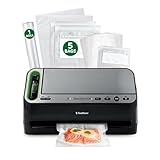
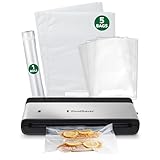

Features come from each maker's product page, manual or official Amazon listing.
The pattern: budget and mid-range sealers give you a Moist button; premium models add separate pressure control (Nesco's Gentle setting) or automate the choice (FoodSaver's moisture detection). Chamber sealers usually skip the label entirely and let you set seal time directly.
Moist or dry: food-by-food chart
| Food | Setting | Extra tip |
|---|---|---|
| Fresh steaks, chops, roasts | Moist | Pat the surface dry; keep the bag mouth clean |
| Ground beef or sausage | Moist | Press flat; pre-freeze 30 to 60 min if juicy |
| Chicken pieces | Moist | Chill well; pad bone ends |
| Marinated meat | Moist, plus pulse | Stop the vacuum before marinade climbs |
| Fresh fish fillets | Moist, plus pulse or Gentle | Pre-freeze fragile fillets |
| Pre-frozen meat or fish | Dry | Seal straight from the freezer |
| Blanched vegetables | Moist, or Dry if pre-frozen | Dry them well after blanching |
| Cooked leftovers | Moist | Cool completely first |
| Soups, stocks, sauces | Freeze first, then Dry | Or use a chamber sealer |
| Hard cheese | Dry | Wrap in parchment if it has rind |
| Bread, cookies, chips | Dry, plus pulse or Gentle | Stop early to avoid crushing |
| Coffee, nuts, rice, flour | Dry | Use a fabric filter or paper towel for powders |
| Berries and soft fruit | Dry, after pre-freezing | Freeze on a tray first |
Where pulse and gentle come in
Moist and Dry decide how the bag is sealed. Pulse and Gentle decide how much vacuum you pull, which matters more for wet and soft food.
- Pulse runs the pump only while you hold the button, so you can stop the instant juice moves toward the seal or bread starts to compress. Then press Seal.
- Gentle (Nesco's term; other brands say low pressure or soft) lowers the vacuum for the whole cycle. Useful for bread, berries, chips and fish.
- Seal only stops the vacuum and seals immediately.
The best combination for marinated meat on an external sealer is Moist plus pulse: pull just enough air, stop, and let the longer seal handle the damp film. Our best vacuum sealers for wet food favors machines that offer both.
What about chamber vacuum sealers?
Chamber sealers handle moisture differently. Because the pressure drops inside and outside the bag together, liquid is not pushed toward the opening, so there is no Moist mode in the usual sense. Instead, you set the vacuum time and seal time yourself. For wet bags, a slightly longer seal time helps, and for chilled liquids, a shorter vacuum keeps them from boiling. See our guide to vacuum sealing liquids.
How to tell if you chose the wrong setting
Look at every seal before the bag goes into the freezer:
- Good seal: an even, clear or slightly milky band across the whole width, with no gaps.
- Too little heat (should have used Moist): a faint, patchy or interrupted line, or a seal you can peel open with your fingers.
- Too much heat: a seal that is wrinkled, bubbled, stretched thin or burned through.
If a seal looks wrong, cut just below it and reseal. A second seal line above the first adds margin; some machines do this automatically, as in our best double seal vacuum sealers.
Common mistakes
- Using Dry on marinated meat and finding loose bags in the freezer a month later.
- Expecting Moist to seal liquids. It will not on an external sealer.
- Skipping pulse on juicy food. The seal setting cannot fix liquid sitting in the seal line.
- Running back-to-back Moist cycles without a rest. Longer heat times warm the strip; many sealers need a short break between bags. Check your manual.
- Ignoring a dirty seal strip. Dried juice on the strip or gasket causes weak seals on any setting. Our vacuum sealer troubleshooting guide covers cleaning.
Choosing a sealer with good moist handling
If you seal fresh meat or fish every week, look for three things: a Moist setting (or automatic moisture detection), a way to stop the pump early (pulse, Gentle or manual vacuum), and ideally a double seal. The Nesco VS-12 checks all three boxes, which is why it is our most recommended external sealer; see our Nesco VS-12 review. If you are new to sealing, start with how to use a vacuum sealer.
FAQ
What is the difference between moist and dry on a vacuum sealer?
On most external sealers, Moist lengthens the heat-seal time so the bag fuses through a thin film of liquid at the mouth, while Dry uses the standard seal time for dry bags. Some brands also adjust the vacuum in their wet mode; Anova, for example, describes a lower-suction function for juicy foods on the Precision Vacuum Sealer Pro. Check your manual to see exactly what your machine changes.
Should I vacuum seal meat on dry or moist?
Use Moist for fresh or marinated meat whose juices could reach the bag mouth, and Dry for meat that is pre-frozen or very dry on the surface. If juice starts moving toward the seal during the cycle, stop the vacuum early with pulse or the Seal button.
What happens if I use the dry setting on wet food?
The seal may not fuse fully through the moisture. It can look sealed but have a weak or patchy line that lets air back in over days or weeks in the freezer. If a seal looks cloudy, wrinkled or broken, cut below it and reseal on Moist.
Can I use the moist setting for everything?
You can, but there is little benefit on dry bags, and the extra heat can over-melt thin bags on some machines. Use Dry for dry and frozen food and save Moist for damp bag mouths.
Does the moist setting let a regular vacuum sealer seal liquids?
No. Moist helps the bag seal through dampness, but an external sealer still pulls air out through the bag mouth and drags liquid with it. Freeze soups and sauces first, or use a chamber sealer.