We research products independently. When you buy through links on this page, we may earn a commission from Amazon at no extra cost to you. As an Amazon Associate we earn from qualifying purchases. Read our affiliate disclosure.
Is a vacuum sealer worth it? Yes, if you freeze meat or fish regularly, buy in bulk, hunt, fish, meal-prep or cook sous vide. A vacuum sealer stops freezer burn, which means food you already paid for stays good for months instead of weeks. No, if you rarely freeze food or shop for a day or two at a time; good freezer bags and careful wrapping will do.
The honest middle ground: a vacuum sealer is a tool that pays off only through use. It does not make food last longer in the fridge, it does not make anything shelf-stable, and bags are an ongoing cost. Here is how to tell which side you are on.
What a vacuum sealer actually does for you
It prevents freezer burn
Freezer burn happens when air reaches the surface of frozen food and moisture escapes, leaving dry, gray, leathery patches. It is a quality problem, not a safety one, but it is the reason so much frozen meat ends up in the trash. A tight vacuum seal keeps air off the food. Our guide to vacuum sealing and freezer burn explains the mechanism.
It makes bulk buying practical
Family packs, a quarter cow, a deer, a cooler of fish, a garden's worth of beans: all of it is cheaper per pound than buying small, but only if you can store it well. Sealed in meal-size portions, bulk food stays good to the end of the batch.
It makes freezing and thawing faster
Sealed food lies flat, freezes quickly, stacks neatly and thaws safely in cold water in its own bag. That convenience is what keeps people using their sealer after the first month.
What it does not do
- It does not extend refrigerator safety for raw meat. Clemson Cooperative Extension (HGIC 3865) warns that some bacteria grow well in low-oxygen packages, and perishable vacuum-packaged food must stay at 34 to 40 °F (1 to 4 °C) or frozen at 0 °F (-18 °C) or below.
- It is not canning. Vacuum sealing does not make perishable food safe at room temperature.
- It does not replace good handling. Food goes in cold and clean, or the seal does not help.
Does vacuum sealing save money?
It can, in two ways.
Less waste. USDA estimates that 30 to 40 percent of the US food supply is wasted. Some of that happens at home, as freezer-burned meat, forgotten leftovers and bread gone stale. If a sealer rescues even a few pounds of meat a month from freezer burn, it starts to earn its keep.
Cheaper buying. Bulk packs and sales only save money if you can store the extra. A sealer turns a large purchase into portions that last.
The running cost is bags. External sealers use embossed bags or rolls, which cost more per bag than zipper freezer bags. Rolls are cheaper than pre-cut bags because you cut each bag to size, and chamber sealers use smooth pouches that cost less again. Reusable zipper-and-valve bags cut costs for short-term storage. Our vacuum sealer vs Ziploc bags comparison runs through the trade-off.
When it does not save money: if the machine lives in a cabinet and comes out twice a year, or you seal food you would have eaten within a week anyway, you are only adding bag costs.
Is a vacuum sealer worth it for you? A quick check
| You... | Worth it? | Why |
|---|---|---|
| Buy meat in family packs or on sale | Yes | Portion and freeze without freezer burn |
| Hunt or fish | Yes | Large volumes, long freezer storage |
| Cook sous vide | Yes | Tight bags cook evenly; seal marinades |
| Meal-prep weekly | Yes | Flat, labeled portions; quick reheating |
| Garden or buy produce in season | Usually | Blanched vegetables freeze well sealed |
| Store dry goods in jars or Mylar | Usually | Jar attachments and heat sealers help |
| Rarely freeze food | No | Freezer bags are enough |
| Shop daily, cook fresh | No | Little to store |
| Have a tiny freezer | Maybe | Flat packs save space, but volume is limited |
How long do vacuum sealers last?
Makers do not publish lifespans, but warranties are a useful hint:
| Model | Warranty (per maker or listing) | Amazon |
|---|---|---|
| Nesco VS-12 Deluxe | 1 year | Check price |
| Avid Armor chamber sealers | 1 year (seal tape, wire, gaskets and seal bars excluded) | Check price |
| Anova Precision Vacuum Sealer and Pro | 2 years on Anova's store | Check price |
| LEM MaxVac 1000 | 5 years | Check price |
| FoodSaver V4400 2-in-1 | 5-year limited (listing) | Check price |


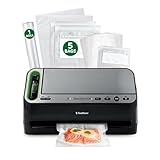
The parts that wear first are the foam gaskets and the heat-seal tape. On established brands, both are sold as replacements, which is a big reason to choose a brand with spare parts over an unknown one. If a sealer stops pulling a full vacuum, a flattened or cracked gasket is the usual suspect.
Which type of vacuum sealer is worth buying?
Handheld (cordless)
Small pumps that vacuum special valve bags and containers. Worth it for leftovers, deli meat and cheese in the fridge, and for tiny kitchens. Not a replacement for heat-sealed bags in long freezer storage.
External (countertop)
The classic FoodSaver-style machine that heat-seals embossed bags. The best value for most households: freezer meat, fish, vegetables, cheese. Liquids must be frozen first. Our best vacuum sealers and best budget vacuum sealers cover the options.
Chamber
Puts the whole bag in a sealed box. Worth it if you seal soups, marinades or large volumes weekly, or want to infuse and compress food. Larger, heavier and pricier upfront, but pouches are cheaper. Our guide to chamber vacuum sealer uses shows what else they do.
Jar sealer
An attachment or cordless gadget for mason jars. Worth it for coffee, nuts, flour, dehydrated and freeze-dried food. It keeps dry food fresher; it does not make perishable food shelf-stable.
Alternatives if you are on the fence
- Water displacement with zipper bags. Lower a filled zipper bag into water to push the air out, then zip it shut. Fine for short freezer storage and casual sous vide.
- Freezer paper or butcher paper. A traditional wrap for meat that works well for a few months. Our vacuum sealer vs freezer paper comparison explains when it is enough.
- A cheap starter sealer. Budget machines still remove air and heat-seal bags; you give up stamina and features, not the core job.
How to get your money's worth
- Keep it on the counter, or somewhere you can reach in seconds. Sealers that live in a closet do not get used.
- Buy rolls, not only pre-cut bags, and cut bags to size.
- Seal right after shopping, while meat is cold and fresh.
- Label and date everything and eat the oldest packs first.
- Freeze flat so packs stack and thaw quickly.
- Replace gaskets when they flatten instead of replacing the machine.
Common mistakes that make a sealer feel not worth it
- Expecting longer fridge life. Raw meat in the fridge keeps the same short window sealed or not.
- Sealing liquids in an external sealer and making a mess. Freeze them first.
- Buying the cheapest machine for heavy use. Budget sealers often need rests between bags; a hunting season needs a machine built for long runs.
- Ignoring seals. One bad seal ruins a bag. Check each one before freezing.
FAQ
Is a vacuum sealer worth it?
Yes, if you freeze meat or fish regularly, buy in bulk, hunt or fish, cook sous vide or meal-prep. Removing the air prevents freezer burn, so food you already paid for stays good to eat. If you rarely freeze food or shop for a day or two at a time, freezer bags and good wrapping are enough.
Does vacuum sealing actually save money?
It can, mainly by cutting waste and letting you buy meat in bulk or on sale. USDA estimates that 30 to 40 percent of the US food supply is wasted, and freezer-burned or spoiled food is part of that. The savings depend on using it: bags are an ongoing cost, so the machine pays off only if it stops you throwing food away or lets you buy cheaper.
How long do vacuum sealers last?
Makers do not publish lifespans, but warranties hint at expected durability: 1 year on the Nesco VS-12 and Avid Armor chamber sealers, 2 years on Anova's sealers (Anova store), 5 years on the FoodSaver V4400 listing and LEM's MaxVac 1000. Gaskets and heat-seal tape wear first and are replaceable on established brands.
Is a chamber vacuum sealer worth it over a regular one?
Only if you seal liquids, wet food or large volumes often. Chamber sealers seal soups and marinades directly and use cheaper smooth pouches, but they are larger, heavier and cost more upfront. For occasional freezer sealing, an external sealer is the better value.
Is a jar vacuum sealer worth it?
If you store dry goods, coffee, dehydrated or freeze-dried food in mason jars, yes: it removes air from jars you can reuse indefinitely. An attachment for an existing sealer is the cheapest route; a cordless electric jar sealer makes sense if your sealer has no accessory port. It does not make perishable food shelf-stable.